
AI image search
AI image search finds images and visual assets in the drive through text descriptions or uploaded images. The full image OCR capability is documented separately in OCR Image Recognition.
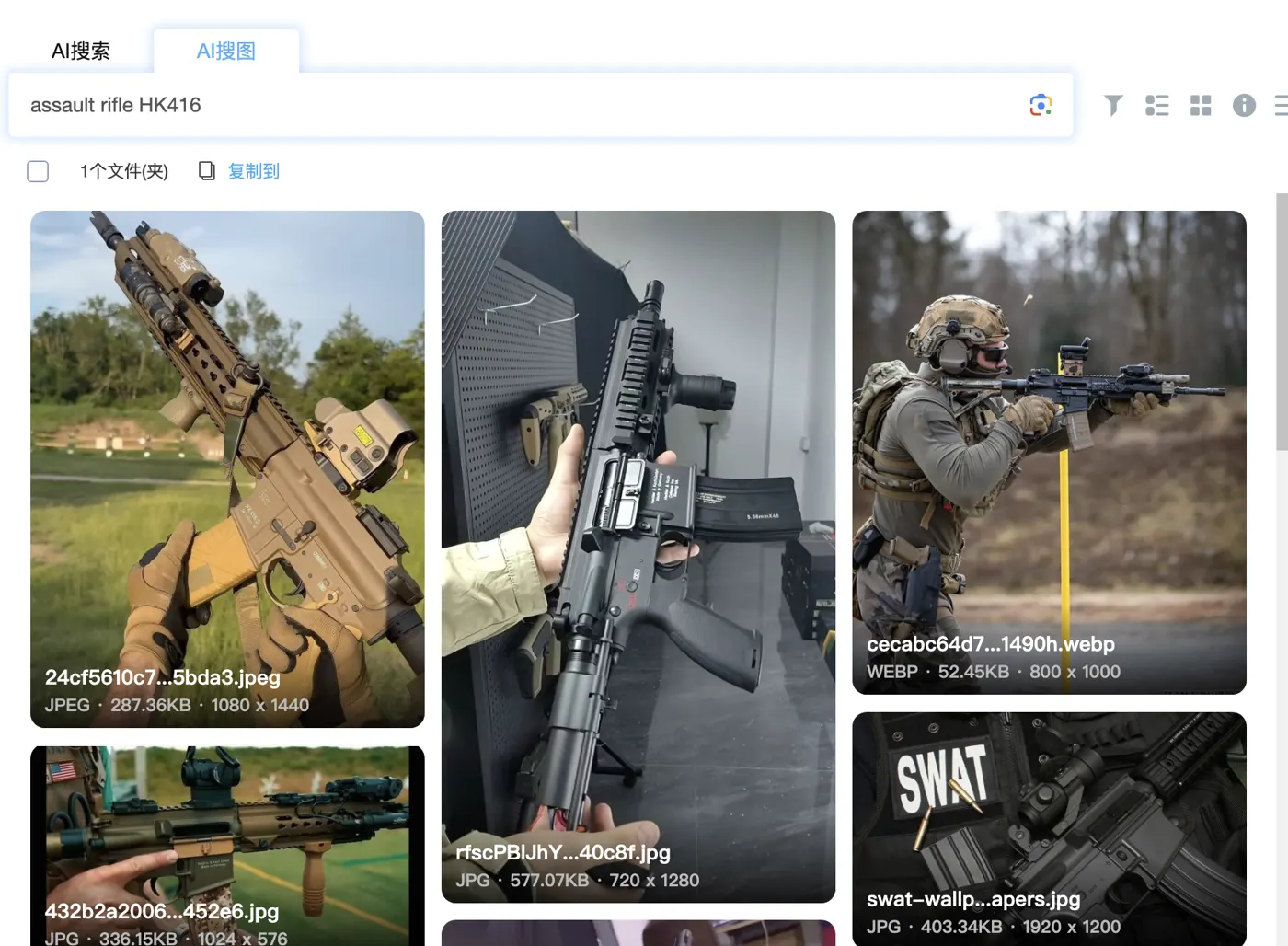
Function description
AI image search is aimed at retrieving corporate images, materials, design drafts, product images, activity images and scanned data. It can not only search for pictures through text descriptions, but also upload a picture to search for similar pictures. It is suitable for companies with a large number of material libraries and visual assets.
Main abilities
- Text search for pictures: Enter descriptions such as "blue packaging box", "conference site photo", "white background picture of a certain product", etc. to search for pictures.
- Image search: Upload reference images and find similar or related images.
- Filter the search scope by permissions, users can only search for images they can access.
- Can be combined with OCR to identify text in images, allowing scans, posters, and screenshots to be included in the search.
- PDF image search allows PDF documents with images to participate in image content retrieval, depending on private-cloud authorization and deployment configuration.
- Suitable for material library, brand asset library, design files, marketing gallery and project drawing materials.
Relationship with material library
AI image search can be combined with the BabelBird material library, waterfall flow display, tags, descriptions, preview and sharing. For brand, marketing, design, engineering and archival teams, AI image search can reduce the workload of manual labeling and hierarchical directory searches.
Permissions and usage boundaries
- Zhichao AI’s answers, searches, and file references should follow Babel’s existing permission system. Users can only access content within their account, department, project, share, and file access controls.
- Materials used for learning, training, indexing, or Q&A should be specified by the enterprise or administrator; all files should not be considered public knowledge sources by default.
- External customer service, website embedding, third-party data sources, privatized models and GPU computing power are optional deployment or customization capabilities and should be subject to actual authorization, implementation plan and enterprise configuration.
- When AI answers involve high-risk content such as contracts, finance, medical, legal, and engineering safety, the AI output should be used as auxiliary information and reviewed by professionals.
Related information
- Permission system
- Security and Audit
- OCR Image Recognition
- FAQ: Deployment, AI and technical issues
- Public introduction: <https://zhuanlan.zhihu.com/p/2052372550513072059>